
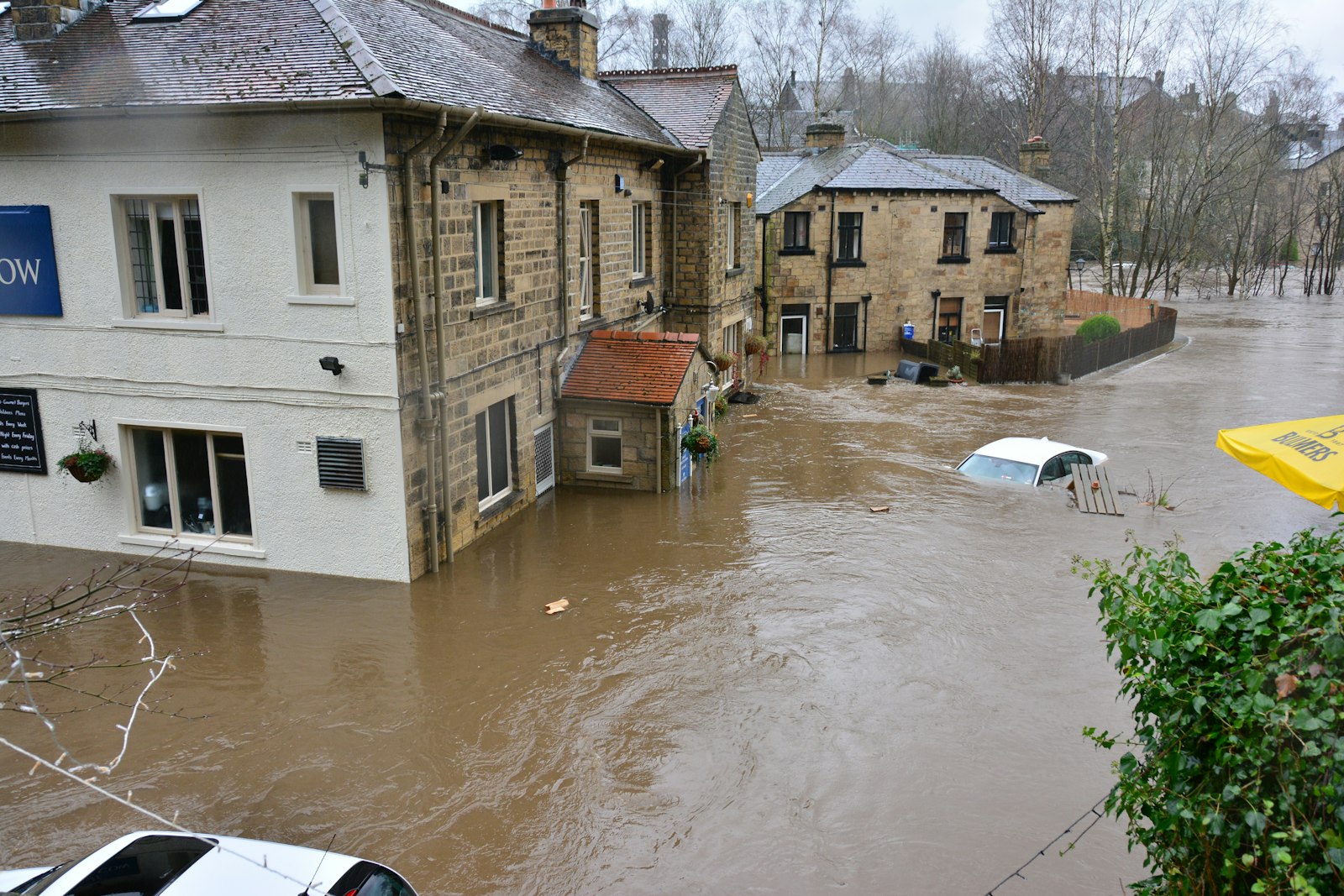
There is one exclusion that appears in every homeowners policy, every renters policy, and every conversation that starts after the water has gone down. Flood is not covered, and it never was.
The exclusion is universal
This is not a matter of shopping for a better policy. Flooding from outside the building is excluded from standard property insurance across the board, which is precisely why a separate flood programme exists.
| Cause of water damage | Homeowners or renters? | Flood policy? |
|---|---|---|
| Burst pipe inside the home | Yes | No |
| Overflowing appliance | Yes | No |
| Rain entering through a storm-damaged roof | Usually yes | No |
| River overtopping its banks | No | Yes |
| Surface water from heavy rainfall | No | Yes |
| Drainage system overwhelmed | No | Yes |
| Sewer backup | Only with an endorsement | Sometimes, with conditions |
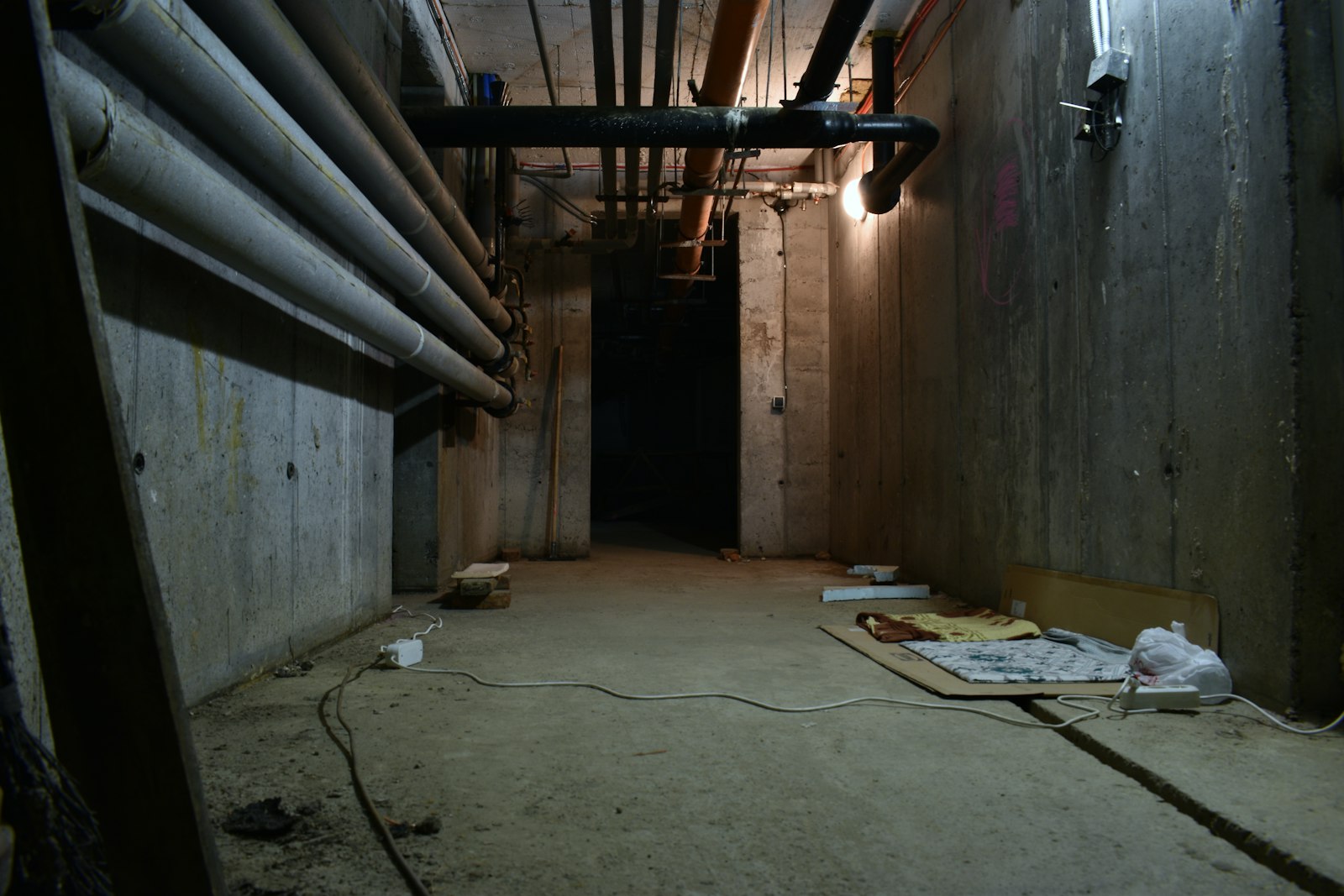
The dividing line is direction of travel. Water arriving from inside the building is usually covered. Water arriving from outside and rising is not.
Why this matters locally
The Lehigh Valley sits between two rivers. The Lehigh runs through Bethlehem and Allentown; the Delaware forms the eastern boundary at Easton. Add the creeks feeding both and a great deal of the region is nearer moving water than people register day to day.

But river proximity is only half the exposure. A significant proportion of flood damage has nothing to do with a river at all — it comes from rainfall arriving faster than drainage can carry it away, in neighbourhoods nobody thinks of as flood-prone.
The map is not the risk
Flood maps determine where coverage is required as a condition of a mortgage. They do not determine where flooding happens.

A large share of flood claims come from outside high-risk zones. If your lender does not require flood insurance, that means your property is not in a mapped high-risk area — not that water cannot reach it. Those are very different statements, and only one of them is a prediction.
Maps also change. Redrawing happens as development alters drainage and as modelling improves, and a property outside a zone today can be inside one after the next revision.
The 30-day waiting period
This is the single most important operational fact about flood insurance, and the reason it cannot be treated as a last-minute purchase.
A policy bought through the National Flood Insurance Program generally does not take effect for 30 days.

So the moment most people think about flood insurance — a storm in the forecast, a river rising upstream, a neighbour flooded last week — is already too late. The waiting period exists specifically to prevent that, because a programme people could join as the water arrived would not function.
| Situation | Waiting period |
|---|---|
| Ordinary purchase | 30 days |
| Bought in connection with a home purchase | Generally waived |
| Property rezoned into a high-risk area | One day, for up to 13 months after the map change |
| Lender requires it mid-loan | Generally waived |
The rezoning exception is worth remembering. If a map revision brings your property into a high-risk area, there is a window during which coverage begins almost immediately — and it closes.
Building and contents are separate
An NFIP policy splits into two purchases, and buying one does not give you the other.
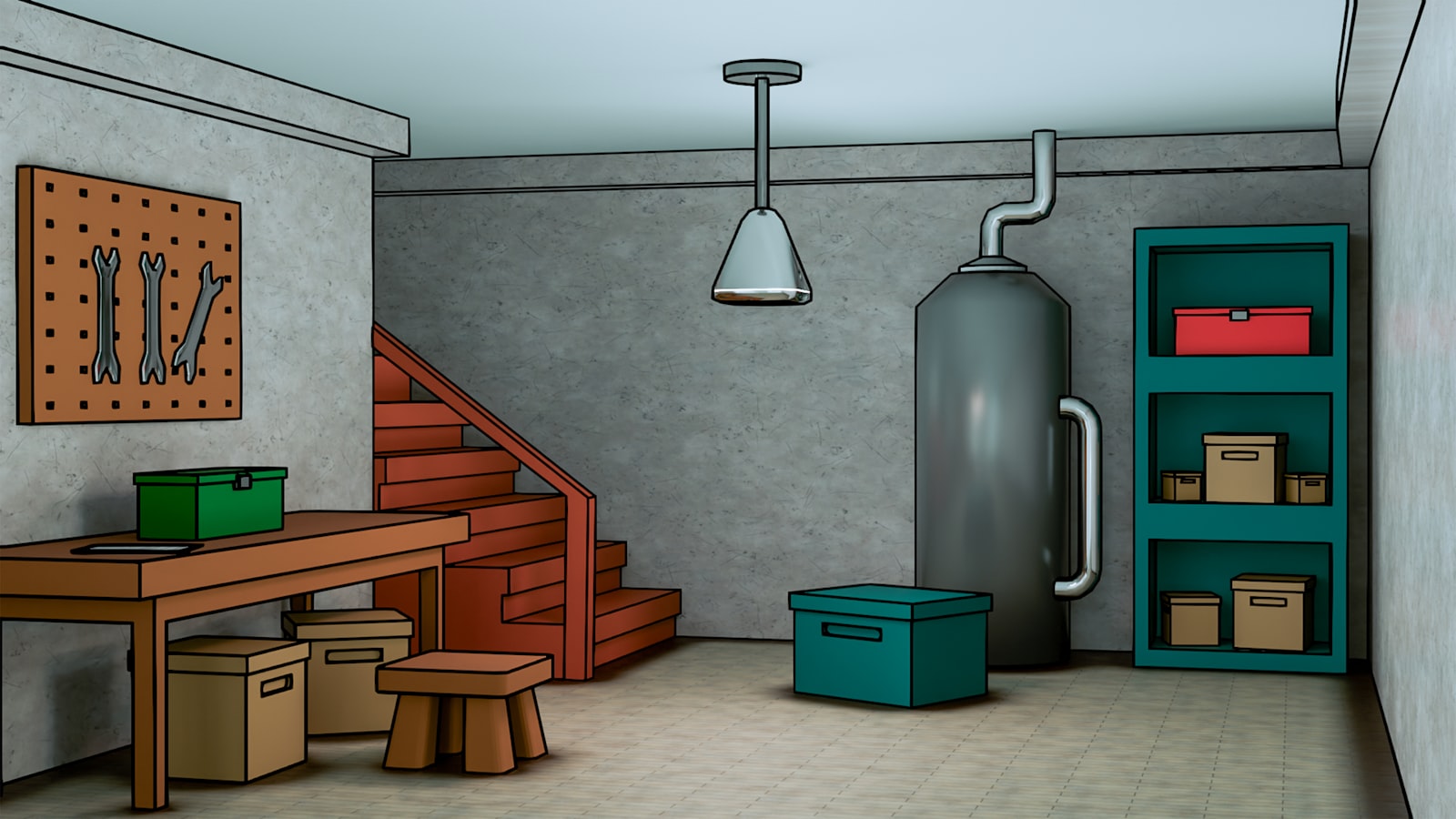
Building coverage protects the structure — foundation, walls, electrical, plumbing, permanently installed fixtures. Contents coverage protects what is inside it.
Homeowners frequently buy building coverage alone and discover afterwards that the furnace was covered and everything in the basement was not. And renters, who own no building at all, need contents coverage specifically — a point worth reading alongside renters insurance in Pennsylvania, since the standard renters policy excludes flood just as a homeowners policy does.
What it costs, and why the number varies so much
Flood premiums are driven by the property rather than by the policyholder, which makes them behave differently from auto or homeowners pricing.
The main factors are elevation relative to expected flood levels, the type of foundation, whether there is a basement, the coverage limits chosen, and the deductible. Two houses on the same street can price very differently because one sits three feet higher than the other.
That also means a quote is genuinely worth getting rather than guessing at. People decline flood coverage on an assumption about cost surprisingly often, and for a property on higher ground outside a mapped zone the figure is frequently lower than expected.
Basements are treated harshly
Flood coverage limits what it pays for below grade. Structural elements and essential equipment are generally covered; finished walls, flooring, furniture and personal belongings in a basement typically are not, or only to a restricted degree.
Given that basements are where Lehigh Valley flooding usually shows up first, this is worth asking about specifically rather than assuming. It also argues for keeping anything irreplaceable off a basement floor.
Deciding
| Situation | Worth considering? |
|---|---|
| Lender requires it | Not a decision — you must carry it |
| Near the Lehigh or Delaware, outside a mapped zone | Yes |
| Finished basement of any value | Yes |
| Ground-floor or basement rental | Yes, contents-only |
| Property that has flooded before | Yes |
| High ground, no basement, no history | Reasonable to decline — knowingly |

The point is to make it a decision rather than a discovery. Most people who go without flood coverage never chose to — they simply assumed their homeowners policy handled it, as covered in homeowners insurance in Pennsylvania.
We can price flood coverage alongside your home or renters policy through our insurance service in Bethlehem and tell you where your address actually stands. Programme details are published by FEMA.
Frequently asked questions
Does homeowners insurance cover flooding?
No. Flooding from outside the home is excluded from every standard homeowners policy, and from renters policies too. Flood coverage has to be bought separately.
How long before flood insurance takes effect?
There is usually a 30-day waiting period on a policy purchased through the National Flood Insurance Program. That is why it cannot be bought in response to a forecast.
Are there exceptions to the waiting period?
Yes. It generally does not apply when the policy is purchased in connection with a home purchase, and it is reduced to one day where a property has been rezoned into a high-risk area — an exception available for up to 13 months after the map change.
Do I need flood insurance if I am not in a flood zone?
You may not be required to carry it, but requirement and risk are different things. A substantial share of flood claims come from properties outside high-risk zones, because heavy rainfall and drainage failures are not confined to mapped areas.
Does flood insurance cover my belongings?
Only if you buy contents coverage. Building coverage and contents coverage are separate purchases under the NFIP, and buying one does not include the other.
Can renters buy flood insurance?
Yes. Renters can buy contents-only flood coverage, which is worth considering for anyone in a ground-floor or basement apartment near the rivers.
Not sure whether you need it?
Ask us before the forecast makes the decision for you — there is a 30-day wait, so this is a spring question, not a storm-week one. Hablamos Español.