Tag: vehicle registration

  • How to Transfer a License Plate in Pennsylvania

    How to Transfer a License Plate in Pennsylvania

    Pennsylvania does something most drivers only half understand: the registration plate belongs to you, not to the car it happens to be bolted to. That single fact changes what should happen every time you sell a vehicle.

    Why the plate stays with you

    In states where plates follow the vehicle, the plate goes to the buyer with everything else. Pennsylvania does the opposite. When you sell a car here, you take the plate off and keep it.

    Removing a license plate from a vehicle being sold in Pennsylvania
    Take the plate off before the buyer drives away.

    You then have three options: move it to your next vehicle, hold it for a future transfer, or turn it in. What you should not do is leave it on the car — the registration is still recorded to you, and so is anything that happens while it is displayed.

    Remove the plate before the buyer drives away. Not after the weekend, not once the paperwork clears. The moment ownership changes, that plate is on someone else’s vehicle with your name attached to it.

    Who you can transfer a plate to

    The rules are more generous than most people assume. A plate can move to another vehicle you own or lease — and also to one owned or leased by a close family member.

    Eligible plate transfers in Pennsylvania
    Transfer to Allowed?
    Another vehicle you own Yes
    Another vehicle you lease Yes
    A vehicle owned or leased by your spouse Yes
    A vehicle owned or leased by your parent Yes
    A vehicle owned or leased by your child Yes
    A friend’s vehicle No
    A sibling’s vehicle No
    A vehicle in a different registration class No
    Plate transfers are allowed between close family members in Pennsylvania
    Spouse, parent or child — the circle is wider than most expect.

    Classification has to match

    Both vehicles must fall under the same registration classification. A passenger car plate transfers to another passenger car. It does not transfer to a commercial vehicle, a truck in a different registered weight class, or a motorcycle.
    Vehicle classification limits which plates can be transferred
    Class has to match. A passenger plate stays with passenger cars.

    Motorcycles carry their own plate type and their own registration fee — $25.00 for one year against $48.00 for a passenger car. Our guide to motorcycle insurance in Pennsylvania covers the rest of what differs for riders.

    The money

    Transfer versus a new registration
    Option Fee When it applies
    Transfer of registration plate $11.00 Moving a plate you already hold
    New passenger car registration, one year $48.00 No plate to transfer
    New passenger car registration, two years $96.00 Optional longer term
    Duplicate registration card at transfer $2.00 If you need a replacement card
    The $11 Pennsylvania plate transfer fee compared to a new registration
    $11 against $48 — the easiest saving in the transaction.

    Thirty-seven dollars is not life-changing, but it is free money sitting on the table during a transaction where you are already paying a title fee and 6% sales tax. Our full cost breakdown for a Pennsylvania title transfer shows where it fits against everything else.

    You cannot do this yourself

    This is the part that surprises people. A plate transfer runs on Form MV-4ST, the Vehicle Sales and Use Tax Return and Application for Registration — and Section F of that form must be completed by an authorized agent of PennDOT.

    The form is not generally available to the public. It is issued to authorized agents, which means the transfer cannot be completed independently or by post in the ordinary case.

    Form MV-4ST section F completed by an authorized PennDOT agent
    Section F can only be completed by an authorized agent.

    In practice this is rarely an inconvenience, because the plate transfer happens as part of the title work anyway. When we process a title transfer at our Bethlehem office, Section F is completed at the same time and you leave with the plate already moved and a new registration card in hand.

    What to bring

    • The registration card for the plate being transferred
    • The plate itself, if it is not already on the new vehicle
    • Photo identification
    • Proof of Pennsylvania insurance on the vehicle receiving the plate
    • The title work for the new vehicle, if the transfer is part of a purchase
    • Proof of relationship, if transferring to a spouse, parent or child

    If you are not replacing the vehicle straight away

    Selling a car without another one lined up is common, and the plate does not expire the moment the vehicle goes. You can hold it and transfer it later when you buy.

    Two things are worth tracking while it sits in the garage. The registration attached to it still has an expiry date, and letting it lapse means renewing as well as transferring when the time comes. And insurance has to be in force on whatever vehicle receives it before the transfer can complete.

    If you have no intention of using the plate again, turning it in is the tidy option — it closes the registration record cleanly rather than leaving an active plate unaccounted for.

    When a new plate is the better call

    Transferring is usually right, but not always:

    • The plate is damaged or unreadable. A faded or bent plate is worth replacing rather than carrying forward.
    • You are changing vehicle class. Then you have no choice.
    • The registration has long since expired. You may be renewing and transferring at once, which changes the arithmetic.
    • You want a specialty or organisation plate. A fresh application is required regardless.
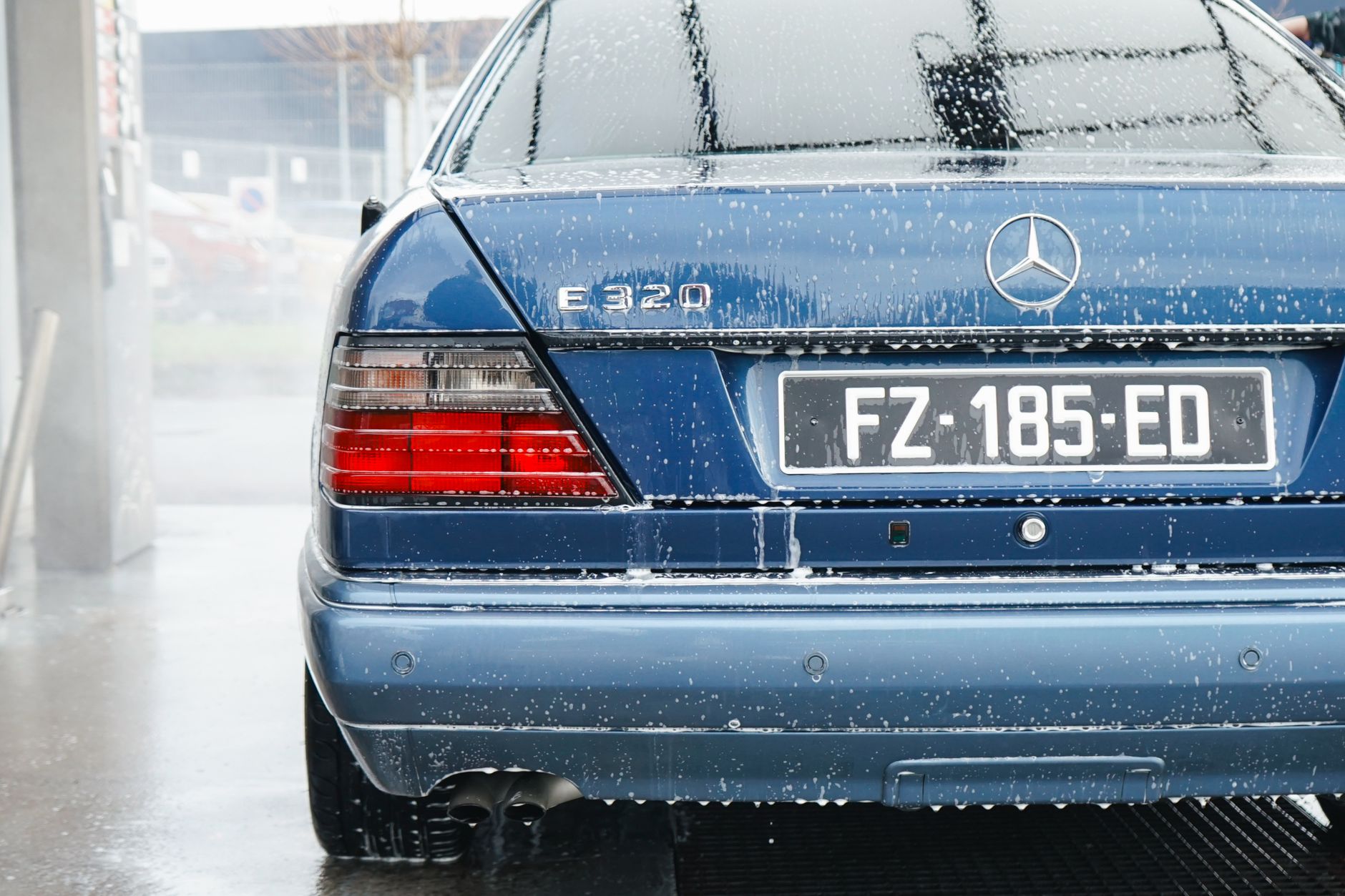
    Personalized and specialty plates can be transferred in Pennsylvania
    Personalised plates are worth the paperwork to keep.

    Personalized plates are the clearest case for transferring. Given what it takes to secure a specific combination, $11 to keep it is not a decision that needs thinking about.

    Plate work sits alongside registration renewals, duplicate cards and address changes in our PennDOT agent services. If your registration is also due, the renewal guide covers the inspection rules that can block it. PennDOT publishes instructions for the form in its MV-4ST fact sheet.

    Frequently asked questions

    Can I transfer my license plate to another car in Pennsylvania?

    Yes. Pennsylvania plates belong to the registrant, not the vehicle, so you may transfer a plate to another vehicle you own or lease. You may also transfer it to a vehicle owned or leased by your spouse, parent, or child.

    How much does it cost to transfer a plate in PA?

    The transfer of registration plate fee is $11.00 under PennDOT’s current schedule of fees. That compares with $48.00 for a new one-year passenger car registration, so transferring saves $37.

    Can I transfer a plate myself?

    No. Section F of Form MV-4ST must be completed by an authorized agent of PennDOT, and the form itself is only available from authorized agents. The transfer cannot be completed independently.

    Can I transfer a plate from a car to a truck?

    Only if the vehicle classification matches. A passenger car plate transfers to another passenger car, not to a commercial vehicle or a different registered weight class.

    What happens to my plate when I sell my car?

    It stays with you. Remove it before the buyer takes the vehicle, then transfer it to your next car, keep it for a future transfer, or turn it in. Leaving it on a sold vehicle creates a problem you do not want.

    Can I transfer a personalized plate?

    Yes. Personalized and most specialty plates transfer the same way as standard issue, which is usually worth doing given the time and cost involved in obtaining one.

    Buying a car and keeping your plate?

    We complete the plate transfer as part of the title work — one visit, one appointment, and you drive away registered. Hablamos Español.
    Call 610-625-1525Book an appointment

  • New to Pennsylvania? Titling and Registering Your Out-of-State Car

    New to Pennsylvania? Titling and Registering Your Out-of-State Car

    Moving to Pennsylvania comes with a deadline most people miss: you have 20 days from establishing residency to apply for a Pennsylvania title and registration on every vehicle you brought with you.

    The process has one step that exists nowhere else in Pennsylvania vehicle paperwork — a physical tracing of the VIN plate. Here is the whole sequence, in the order that works.

    The 20-day clock

    Residency is established when you move in with the intention of staying — taking a job, signing a lease, buying a home. It is not tied to when you change your mailing address or get a Pennsylvania driver’s licence.

    Settling into a new Pennsylvania neighbourhood
    The 20-day clock starts when you establish residency.

    Twenty days sounds generous until you account for arranging insurance, gathering documents that are somewhere in a moving box, and finding an appointment. Start in the first week.

    Step one: Pennsylvania insurance

    Your existing out-of-state policy does not satisfy Pennsylvania requirements, and plates cannot be issued without coverage that does. This has to happen before the titling appointment, not after.

    Pennsylvania requires 15/30/5 liability plus at least $5,000 in medical benefits, and it asks you to make a choice most states do not — full tort or limited tort. That single election materially affects your rights after an accident, and it is worth understanding before you sign rather than after. Our guide to Pennsylvania’s minimum insurance requirements covers the tort decision in detail.

    Switching to a Pennsylvania auto insurance policy after moving
    Out-of-state coverage does not satisfy PA requirements.

    Moving states is also one of the better moments to shop rates, since you are starting a new policy anyway. We compare coverage across several carriers rather than quoting a single company.

    Step two: the VIN tracing

    Pennsylvania requires a physical tracing of the vehicle identification number plate attached to the back of your title application. It is a pencil rubbing — tracing paper over the VIN plate, shaded with a pencil until the numbers show through.

    You can do this yourself. The VIN plate is usually visible through the windscreen on the driver’s side of the dashboard, which makes a clean tracing awkward but not impossible.

    Making a physical VIN plate tracing for a Pennsylvania title application
    A pencil rubbing of the VIN plate — genuinely low-tech.

    If you cannot get a legible tracing, a certified inspection mechanic or a notary employed by a licensed dealer can visually verify the VIN instead. Ask before you spend twenty minutes wrestling with tracing paper in a car park.

    Step three: gather the documents

    What to bring to your titling appointment
    Document Why it is needed Watch out for
    Out-of-state certificate of title Surrendered to PennDOT If a lender holds it, PennDOT requests it from them
    VIN tracing or verification Confirms the vehicle and VIN match Must be legible
    Proof of Pennsylvania insurance Required before plates are issued Out-of-state policies do not count
    Pennsylvania driver’s licence or ID Identity and residency A PA licence is itself a 20-day requirement
    Current odometer reading Recorded on the application Take it the morning of the appointment
    Lien information If the vehicle is financed Have the lender’s details to hand
    An out-of-state license plate on a vehicle newly arrived in Pennsylvania
    Out-of-state plates come off once PA registration is issued.

    What it costs

    Typical cost for a new resident titling one vehicle
    Item Amount Notes
    Certificate of title $72.00 Standard Pennsylvania title fee
    Registration, passenger car, one year $48.00 $96.00 for a two-year term
    Lien recording $36.00 Only if the vehicle is financed
    Safety inspection Varies by station $12.00 sticker fee plus labour
    Sales tax $0 Not charged on a vehicle you already own

    You do not pay Pennsylvania sales tax on a car you already owned. The 6% applies to purchases, not to bringing your own vehicle into the state. If you are buying a car after arriving, that is a different transaction — see our full cost breakdown.

    Leased vehicles are different

    If you lease, the leasing company owns the vehicle and holds the title, so you are not the one titling it. Contact the lessor before you move — most have a defined process for registering a leased car in a new state, and some restrict which states a vehicle may be moved to at all.

    You will still need Pennsylvania insurance meeting the lessor’s required limits, which are usually well above the state minimum.

    Step four: inspection

    Pennsylvania requires an annual safety inspection, and an emissions test in program counties. Both Lehigh and Northampton are program counties, so most Bethlehem-area vehicles need both.

    Pennsylvania safety and emissions inspection for a newly registered vehicle
    Lehigh and Northampton both require emissions testing.

    Get it done promptly after titling. An expired safety inspection blocks your next registration renewal outright — the system checks automatically, as covered in our registration renewal guide.

    If a lender holds your title

    Most financed vehicles have their title held by the lender, either on paper or electronically in the issuing state’s system. You cannot surrender a document you do not have.

    PennDOT handles this by requesting the title from the lienholder directly once your application is filed. It adds time, so start earlier than the 20 days would suggest, and tell your lender you are moving states — some process the request faster when they are expecting it.

    The lien itself carries over to the Pennsylvania title, and the $36 lien recording fee applies. Your loan terms do not change; only the state recording the security interest does.

    A realistic order of operations

    1. Week one: arrange Pennsylvania insurance and apply for your PA driver’s licence.
    2. Week one: locate the out-of-state title, or contact your lender if they hold it.
    3. Week two: make the VIN tracing, or arrange verification.
    4. Week two: title and register at a PennDOT agent — plates issued the same visit.
    5. Week three: safety and emissions inspection.
    6. Then: remove and dispose of the out-of-state plate per that state’s rules.
    Receiving new Pennsylvania registration and plates
    An agent can issue plates during the same visit.

    We handle new-resident titling regularly through our PennDOT agent services in Bethlehem — the out-of-state surrender, the tracing check, the title application, and plates in a single appointment. PennDOT publishes the official requirements on its motor vehicle information for new residents page.

    Frequently asked questions

    How long do new residents have to register a car in Pennsylvania?

    All new residents must apply for Pennsylvania title and registration within 20 days of establishing residency. The clock starts when you establish residency, not when you get around to unpacking.

    Do I have to surrender my out-of-state title?

    Yes. Pennsylvania title procedures require the out-of-state title to be surrendered to the Bureau of Motor Vehicles when you apply for a Pennsylvania title. If a lender holds it, PennDOT requests it from them directly.

    What is a VIN tracing and why do I need one?

    It is a physical impression of the vehicle identification number plate, attached to the back of your title application. It proves the vehicle physically exists and its VIN matches the paperwork. You can make one yourself with tracing paper and a pencil.

    Can someone else verify the VIN for me?

    Yes. If you cannot get a legible tracing from the plate, a certified inspection mechanic or a notary employed by a licensed dealer can visually verify the VIN instead.

    Do I need a Pennsylvania inspection right away?

    Your vehicle needs to pass a Pennsylvania safety inspection, and an emissions test in program counties including Lehigh and Northampton. Arrange it promptly after titling — an expired inspection blocks future registration renewals.

    Can I keep my out-of-state insurance?

    No. Pennsylvania requires coverage that meets its own minimums — 15/30/5 liability plus $5,000 in medical benefits — from an insurer licensed to write in Pennsylvania. Sort this before your titling appointment, because plates cannot be issued without it.

    Just moved to the Lehigh Valley?

    Bring your out-of-state title and PA insurance and we will handle the tracing check, the title application, and your new plates in one visit. Hablamos Español.

    Call 610-625-1525Book an appointment

  • PA Vehicle Registration Renewal: Costs, Deadlines and Your Options

    PA Vehicle Registration Renewal: Costs, Deadlines and Your Options

    Pennsylvania registration renewal has changed more than most drivers realize. The stickers are gone, PennDOT closed its walk-in vehicle counters, and the card no longer arrives in the mail if you renew online.

    Here is how the process works in 2026, what it costs, and the two things that will stop a renewal cold.

    When to renew

    Pennsylvania registrations expire at the end of the month shown on your registration card. PennDOT sends a renewal notice by mail or email roughly three months in advance, but the notice is a courtesy — not receiving one does not extend your deadline.

    A Pennsylvania vehicle registration card kept in the car
    PennDOT no longer mails a card for registrations renewed online.

    You can renew before the expiration date without losing time; the new term begins when the old one ends. There is no grace period after expiration, so renewing early is always the safer choice.

    There is nothing to stick on your plate. Pennsylvania stopped issuing registration stickers at the end of 2016. Enforcement is electronic, which means an officer can see your registration status from the plate alone.

    What you need before you start

    • Your license plate number and title number
    • Current Pennsylvania insurance information
    • Your vehicle’s odometer reading
    • A valid payment card
    • A current safety inspection — and, in most of the Lehigh Valley, a current emissions test

    Three ways to renew

    Pennsylvania registration renewal methods compared
    Method How long it takes Get proof immediately? Best for
    Online through PennDOT Under 10 minutes Yes — print it yourself Straightforward renewals with everything current
    Authorized agent or tag service Same visit Yes — printed on the spot Anyone without a printer, or with a complication
    By mail Several weeks No Drivers without internet access
    Renewing a Pennsylvania vehicle registration online
    Online renewal takes minutes when inspection and insurance are current.

    The online route is genuinely fast when nothing is wrong. The moment something is out of the ordinary — a lapsed inspection, an address change, a lost card, a plate that needs moving to a different vehicle — an agent is usually quicker than working out which form applies. That is the bulk of what we handle through our PennDOT agent services in Bethlehem.

    Inspection and emissions: the prerequisite most people forget

    Pennsylvania will not renew a registration when the safety inspection has expired, and the system checks automatically. This is the single most common reason an online renewal fails partway through.

    Inspection requirements in Pennsylvania
    Requirement How often Applies in Lehigh & Northampton counties?
    Safety inspection Annually Yes — statewide requirement
    Emissions inspection Annually Yes — both counties are in a program area
    Inspection sticker fee Per inspection $12.00, charged by the station

    Both Lehigh and Northampton counties sit inside an emissions program area, so most vehicles from model year 1975 onward with a gross weight of 9,000 pounds or less need an emissions test alongside the annual safety inspection. Vehicles registered in non-program counties skip the emissions portion.

    A vehicle undergoing emissions inspection in Pennsylvania
    Lehigh and Northampton counties both require emissions testing.

    What renewal costs in 2026

    Pennsylvania registration renewal fees
    Vehicle type One year Two years
    Passenger car $48.00 $96.00
    Motorcycle $25.00 $50.00
    Motor-driven cycle $11.00 $22.00
    Ambulance or hearse $104.00 $208.00
    School bus or school vehicle $45.00 $90.00

    Two additional charges catch people out. Electric and plug-in hybrid drivers now pay an annual road user charge, and duplicate registration cards carry a small fee unless obtained online.

    Additional charges at renewal
    Charge Amount Notes
    Electric vehicle road user charge $250.00 per year $500.00 for a two-year registration term
    Plug-in hybrid road user charge $63.00 per year $126.00 for a two-year registration term
    Duplicate registration card, online No fee Obtained free at the time of online renewal
    Duplicate registration card, at an agent $2.00 At the time of renewal or transfer
    Duplicate registration card, any other time $7.00 Ordered as a standalone transaction
    Transfer of registration plate $11.00 Moving your plate to a different vehicle
    Paying Pennsylvania vehicle registration renewal fees
    A two-year term costs exactly double a one-year term.

    Driving on expired tags

    An expired registration is a summary offense in Pennsylvania. Beyond the fine, there are two consequences drivers tend not to think about.

    The first is that an unregistered vehicle can be towed in certain circumstances, which turns a modest fine into an expensive afternoon of impound and storage charges. The second is subtler: if you are in an accident while unregistered, it complicates the claim and hands the other party’s insurer an argument to use against you.

    Neither consequence is worth the few minutes renewal actually takes, and both are entirely avoidable by renewing before the month on your card runs out.

    A traffic stop for expired registration in Pennsylvania
    Expired tags are a citable offense and can affect an insurance claim.

    Insurance and registration are tied together in Pennsylvania — a coverage lapse can trigger a registration suspension on its own. If your rate is the reason coverage lapsed, it is worth having someone compare auto insurance quotes across multiple carriers rather than going uninsured. Our guide to Pennsylvania’s minimum car insurance requirements explains what you are legally obliged to carry.

    Situations that need more than a standard renewal

    You moved

    Pennsylvania requires you to report an address change within 15 days. Update it before renewing so the record matches, otherwise your renewal notice and any correspondence go to the old address and you may never see them.

    You bought a different vehicle

    Your plate belongs to you, not the car. Transferring it to a newly purchased vehicle costs $11.00 — considerably less than a new registration. This is normally done as part of the title work; see our step-by-step guide to transferring a car title in Pennsylvania.

    You drive an electric vehicle

    The road user charge is now part of your renewal, and at $250 annually it is worth budgeting for well before the notice arrives.

    An electric vehicle charging in Pennsylvania, subject to the annual road user charge
    EV owners now pay an annual road user charge at renewal.

    PennDOT publishes the current renewal procedure and online portal on its registration renewal page.

    Frequently asked questions

    How much does it cost to renew a car registration in PA?

    A standard passenger car registration is $48.00 for one year or $96.00 for two years under PennDOT’s current fee schedule. Motorcycles are $25.00 for one year or $50.00 for two. Electric and plug-in hybrid vehicles pay an additional annual road user charge.

    Does PennDOT still mail registration stickers?

    No. Pennsylvania eliminated registration stickers for license plates at the end of 2016. Your registration is verified electronically, so there is nothing to affix to your plate. You should still keep the registration card with the vehicle.

    Do I need an inspection before renewing my registration?

    Your safety inspection must be current. Pennsylvania will not let you complete a renewal if the safety inspection has expired, and PennDOT verifies inspection status electronically during online renewal.

    Do Lehigh and Northampton counties require emissions testing?

    Yes. Both counties are in an emissions program area, so most model year 1975 and newer vehicles with a gross weight of 9,000 pounds or under require an annual emissions test in addition to the safety inspection.

    Can I renew my registration if my insurance lapsed?

    No. Active Pennsylvania insurance is required to keep a vehicle registered, and a lapse can lead to registration suspension. Restore coverage before attempting to renew, and be aware that a lapse can also affect your future premiums.

    What happens if I drive with an expired registration in PA?

    It is a summary offense that carries a fine and can result in the vehicle being towed in some circumstances. An expired registration can also complicate an insurance claim if you are involved in an accident.

    Renewal blocked or running late?

    We process registration renewals, duplicate cards, plate transfers, and address changes as an authorized PennDOT agent in Bethlehem — no lines, no forms to work out. Hablamos Español.

    Call 610-625-1525Book an appointment