Pennsylvania treats motorcycles differently from cars in two specific ways, and both of them matter more than the premium. One leaves most riders without medical coverage. The other quietly gives them back a legal right that car drivers routinely sign away.
The liability requirement is identical
A motorcycle must carry the same minimum liability as a car — $15,000 bodily injury per person, $30,000 per accident, $5,000 property damage. Written as 15/30/5, exactly as it is on an auto policy, and required before the bike can be registered.
That is where the similarity ends.
Difference one: no required medical benefits
Every Pennsylvania car policy must include at least $5,000 in first-party medical benefits, paid regardless of who caused the crash.
Motorcycle policies carry no such requirement. Medical payments coverage exists and can be added, but it is optional — and a rider who never asked for it does not have it.

Consider what that means in practice. Motorcycle injuries skew severe, and the coverage that would pay first is the one Pennsylvania does not require on a bike. Riders relying on health insurance alone should check their deductible, their out-of-pocket maximum, and whether the plan excludes motorcycling. Adding medical payments coverage is inexpensive relative to what it does.
Difference two: limited tort does not restrict you
This one works in the rider’s favour, and almost nobody knows it.
If you elected limited tort on your car policy, you gave up the right to sue for pain and suffering unless your injury clears a demanding legal threshold. That election does not follow you onto a motorcycle. Injured on a bike, you can pursue full pain and suffering damages regardless of what your car policy says.
| Where you were injured | Limited tort restricts you? |
|---|---|
| Driving your own car | Yes |
| Passenger in a private passenger vehicle | Yes |
| Riding a motorcycle | No |
| Walking as a pedestrian | No |
| Riding a bicycle | No |
| Occupant of a vehicle that is not a private passenger vehicle | No |
The mechanism is a statutory exception: limited tort restrictions do not apply to occupants of vehicles that are not private passenger vehicles. Our guide to full tort versus limited tort in Pennsylvania covers the full list of exceptions and why the election binds your whole household.
The helmet rule
Pennsylvania has a partial helmet law. Riders aged 21 or over may ride without one, provided they either have at least two years of riding experience or have completed a PennDOT-approved motorcycle safety course. Under 21, a helmet is required.
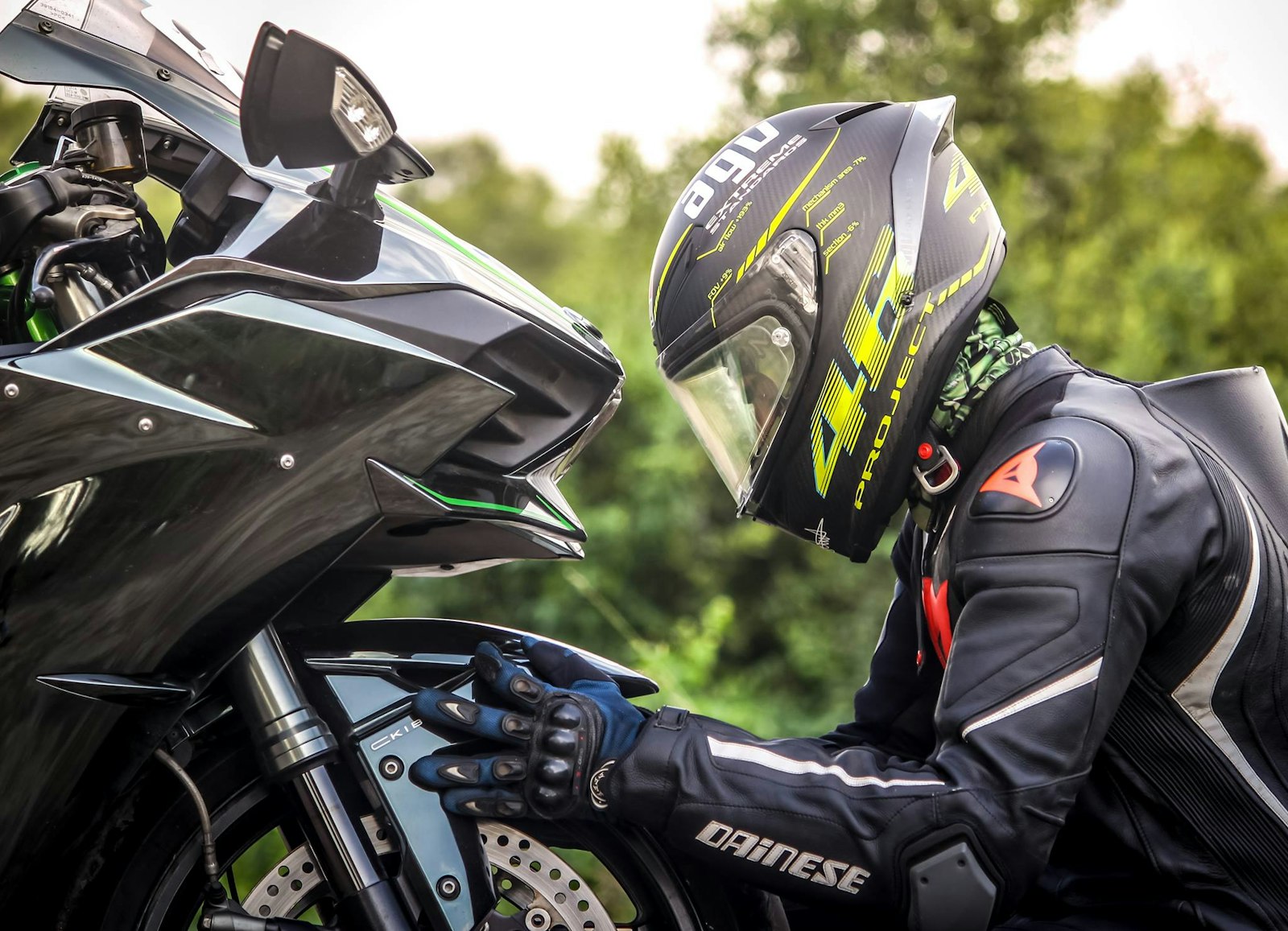
Insurance and law part company here. The choice is legal for qualifying riders; it does not change the severity of a head injury, and it does not change what your policy pays.
Coverage worth carrying beyond the minimum
| Coverage | What it does | Worth it when |
|---|---|---|
| Medical payments | Your injuries, regardless of fault | Almost always — nothing else fills this gap |
| Uninsured / underinsured motorist | When the at-fault driver has too little cover | Almost always — bike injuries outrun 15/30 fast |
| Collision | Repairs your bike after a crash you caused | Any bike you could not replace out of pocket |
| Comprehensive | Theft, fire, vandalism, weather, animal strikes | Almost always — bikes are easy to steal |
| Accessory or custom parts | Exhausts, bags, seats, chrome, audio | If you have modified the bike at all |
| Roadside assistance | Recovery, which is specialised for bikes | Long-distance riders |
Two of those deserve emphasis. Uninsured motorist coverage matters disproportionately for riders, because a motorcycle injury can exceed a $15,000 liability limit almost immediately. And custom parts are typically covered only to a low default sub-limit — if you have spent money on the bike, schedule it.
Registration and inspection for a bike
Motorcycle registration runs $25.00 for one year or $50.00 for two, roughly half the passenger car rate. Motorcycles also require an annual safety inspection in Pennsylvania, though they are not subject to the emissions testing that applies to cars in Lehigh and Northampton counties.
Registration and insurance stay linked the same way they do for a car: a lapse in coverage can lead to a registration suspension, and an expired inspection blocks renewal outright.
What lowers a motorcycle premium
- Complete an approved rider safety course. It earns a discount with most carriers and satisfies the helmet exemption at the same time. Courses are run through the Pennsylvania Motorcycle Safety Program.
- Bundle with auto or home. Multi-policy discounts apply to bikes as readily as cars.
- Keep the bike garaged. Secure overnight storage reduces theft exposure.
- Raise the deductible on collision, not the liability limits.
- Ride a bike the actuaries like. Engine size and category move the premium considerably.
Winter storage
Pennsylvania riding is seasonal for most people, and cancelling the policy in November is a common instinct. It usually costs more than it saves.
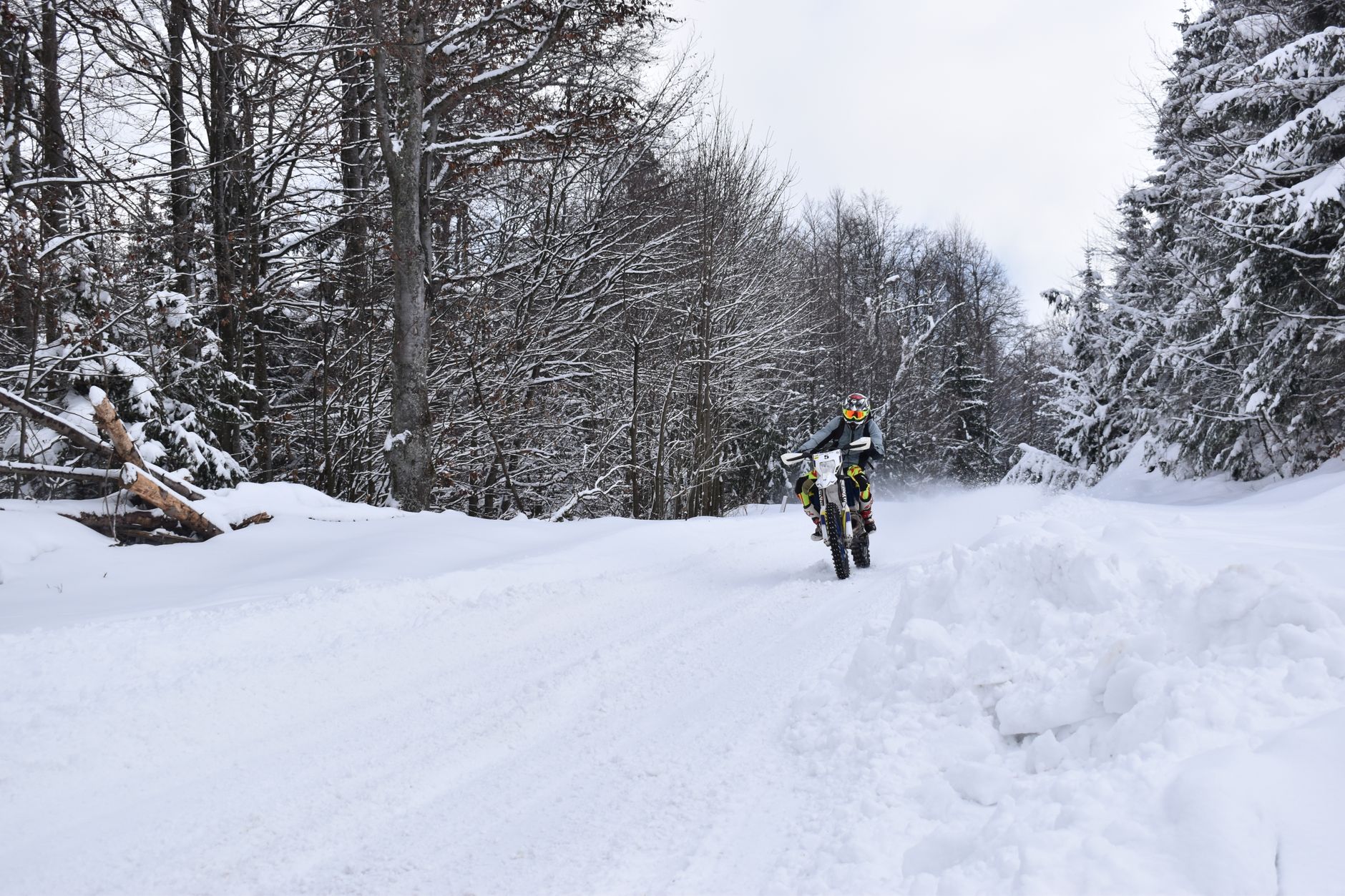
A coverage lapse can raise your rate when you restart, and a stored bike can still be stolen, or damaged by fire, flood, or a burst pipe. Most carriers offer a reduced comprehensive-only arrangement over winter that keeps the policy continuous.
We write auto and cycle coverage together through carriers including American National, Bristol West, Capitol and Progressive — see our insurance service in the Lehigh Valley. If you have just bought the bike, how to insure a vehicle you just bought covers the timing, and the registration side sits with our PennDOT agent services.
Frequently asked questions
What insurance is required for a motorcycle in Pennsylvania?
The same liability minimums as a car: $15,000 bodily injury per person, $30,000 per accident, and $5,000 property damage — commonly written 15/30/5. Motorcycles must be insured to be registered.
Do motorcycle policies include medical benefits in PA?
No. Unlike car policies, Pennsylvania motorcycle policies are not required to include first-party medical benefits. Medical payments coverage is available but optional, and many riders do not realise they are without it until they need it.
Does limited tort apply to motorcycles?
No. Even if you carry limited tort on your car policy, you can still pursue full pain and suffering damages when you are injured on a motorcycle. A motorcycle is not a private passenger vehicle for these purposes.
Do I have to wear a helmet in Pennsylvania?
Not necessarily. Riders aged 21 or over may ride without a helmet if they have at least two years of riding experience or have completed a PennDOT-approved motorcycle safety course. Riders under 21 must wear one.
How much is motorcycle registration in Pennsylvania?
A motorcycle registration is $25.00 for one year or $50.00 for two years under PennDOT’s current schedule of fees — roughly half the cost of a passenger car registration.
Should I cancel my motorcycle insurance over winter?
Usually not. A lapse in coverage can raise your rate when you restart, and a stored bike can still be stolen or damaged by fire or a burst pipe. Comprehensive-only storage coverage is generally the better option.
Riding season sorted?
We quote motorcycle coverage across several carriers and can bundle it with your auto policy. Ask about medical payments — most riders do not have it. Hablamos Español.