
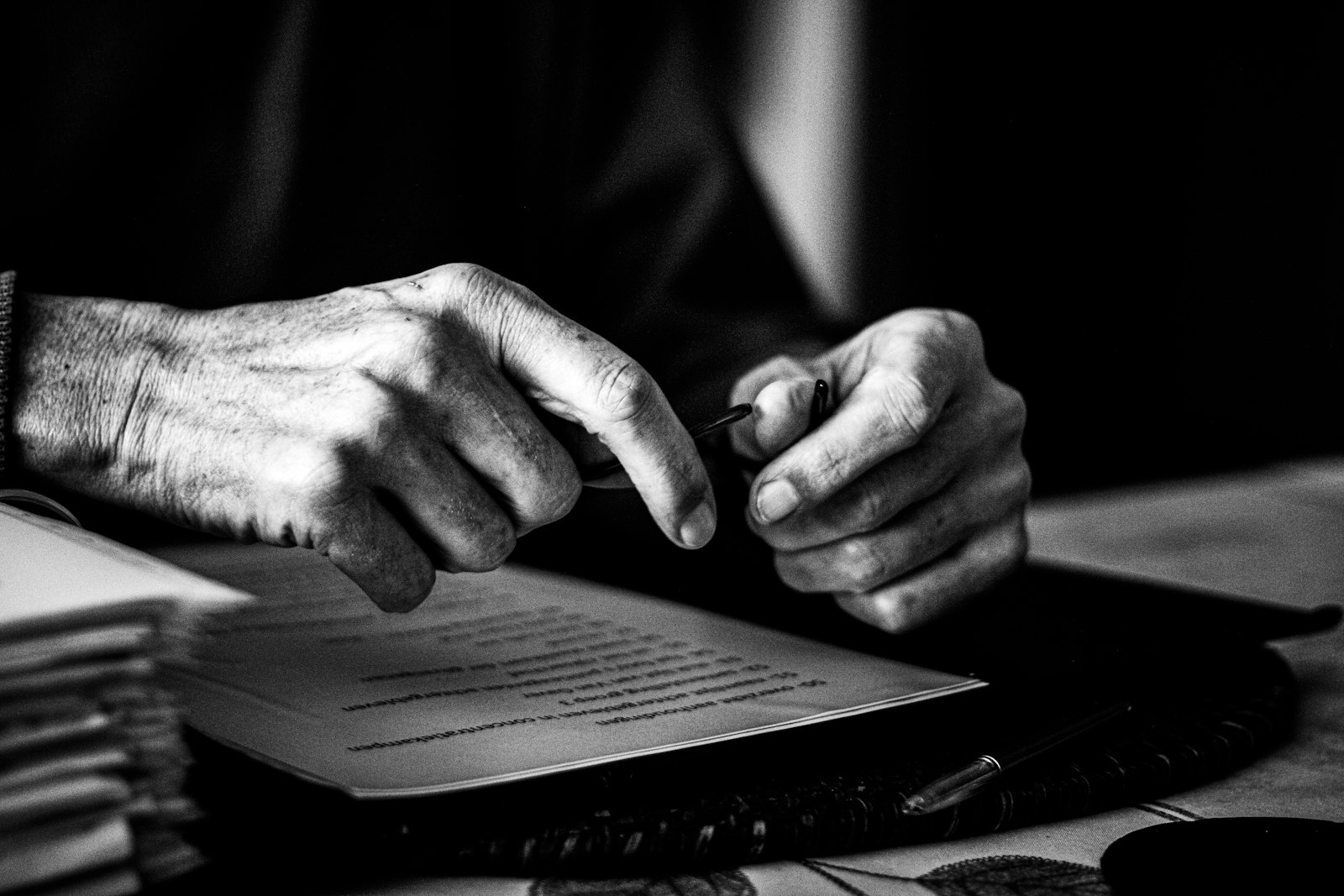
Illness, injury, tremor, arthritis, sight loss — plenty of people cannot produce a conventional signature, and it does not remove their right to sign a document. Pennsylvania recognises several ways around it, though the law is quieter on the detail than you might expect.
Three recognised approaches
| Approach | What happens | Witnesses recommended |
|---|---|---|
| Signature by mark | The signer makes a mark, commonly an X | Two |
| Signing with assistance | Another person steadies or guides the hand | Two |
| Signing by direction | Another person signs the signer’s name at their direction | Two |
| Conventional signature | The signer signs normally, however shakily | None required |
The last row is worth stating plainly. A signature does not have to be neat, legible, or match anything. An unsteady scrawl made by the signer is still a signature, and the alternatives below are only needed when even that is not possible.

What Pennsylvania law actually says
Pennsylvania’s notary law does not set out a specific procedure for a signature by mark. There is no statute prescribing the steps. What exists instead is accepted practice, and the Pennsylvania Association of Notaries recommends two witnesses be present for a signing by mark — with both noted on the document and in the notary’s journal.
That distinction matters, because it explains why practice varies between notaries. Some will handle a mark on the spot; others insist on witnesses; a few decline entirely. None of them is breaking a rule, because there is no rule at that level of detail.
The practical consequence for you is simple: call ahead. Turning up with a signer who cannot hold a pen and no witnesses is how these appointments fail.
Why two witnesses
A mark carries almost no identifying information. A signature can be compared against other examples; an X cannot be distinguished from any other X.

Witnesses fill that gap. They are people who can later say what they saw: that this person made this mark, on this document, at this time, apparently freely and with understanding. That is what makes the mark defensible if anyone challenges it.
They should be present for the whole thing, not called in afterwards to sign, and they should be identified in the same way as any signer.

Signing by direction
Where a signer cannot make even a mark, another person may sign the signer’s name at their direction and in their presence.
Two constraints apply, and both are absolute.
The notary cannot be that person. A notary must remain neutral, and signing the document would destroy that.
The person who signs cannot then be a witness. They have taken an active role in the execution, so they cannot also be one of the two observers of it. That means a bedside signing needs at least five people present: the signer, the person signing by direction, two witnesses, and the notary.

Where the real test lies
Physical capacity is the visible problem and rarely the deciding one. The question a notary has to answer is whether the signer understands the document and is signing willingly.

Neither of those depends on being able to hold a pen. A person with advanced arthritis may understand a document perfectly. A person who can sign fluently may be too confused, or too pressured, for the notarization to proceed.
| Question | How it is judged |
|---|---|
| Who is this person? | Government photo identification, or a credible witness |
| Do they understand what they are signing? | Conversation with the signer directly |
| Are they signing willingly? | Their own answers, not anyone else’s |
| Can they communicate at all? | Directly, or through an interpreter |
| Can they physically sign? | The least important question of the five |
If someone else keeps answering for the signer, or the signer seems unsure what the document is, a notary is required to stop. Declining is the safeguard operating as intended, not obstruction — the same principle described in notarizing when the signer does not speak English.
Documents with their own rules
Two common documents impose statutory witness requirements that override general practice.
A power of attorney requires two witnesses and notarization, and the agent, the notary, and anyone who signed on the principal’s behalf are all barred from witnessing — see getting a power of attorney notarized.
An advance directive requires two witnesses with an even longer disqualification list, including relatives and heirs, though notarization is not required — see living wills and advance directives.
Both are documents frequently signed by people who cannot sign easily, which is exactly when the witness rules bite hardest.
Planning the appointment
- Call first and describe the situation honestly.
- Bring two witnesses who have no interest in the document, each with photo identification.
- Bring the signer’s identification — the requirement does not relax.
- Choose a good time of day if the signer’s alertness varies.
- Leave the document unsigned, complete in every other respect.
- Ask about a mobile visit if the signer cannot travel — see mobile, online and in-office notarization.
We handle these regularly at our Bethlehem notary office and will talk through what your situation needs before anyone travels. The regulations governing acknowledgments sit in 4 Pa. Code § 167.61.
Frequently asked questions
Can someone who cannot write still have a document notarized?
Yes. A signer may make a mark — commonly an X — instead of a full signature, may sign with physical assistance, or may direct another person to sign their name on their behalf. All three are recognised approaches.
Does Pennsylvania law set out a procedure for a signature by mark?
Not specifically. Pennsylvania’s notary law does not prescribe a detailed procedure, so notaries follow accepted practice — which the Pennsylvania Association of Notaries recommends should include two witnesses present at the signing.
How many witnesses are needed?
Two is the accepted practice for a signing by mark, with assistance, or by direction. Both witnesses should be identified, should be present throughout, and should be noted on the document and in the notary’s journal.
Can a family member act as a witness?
Pennsylvania does not prohibit it for a general signature by mark, but anyone with an interest in the document is a poor choice. Where the document is a power of attorney or an advance directive, specific statutory disqualifications apply and the agent is barred outright.
Can the notary sign for the person?
No. A notary must remain neutral and cannot act as the signer or the person signing by direction. Someone else must fill that role, and that person then cannot serve as one of the two witnesses.
What if the signer cannot communicate at all?
Then the notarization cannot proceed. The signer must be able to indicate their understanding of the document and their willingness to sign it. If a notary cannot establish both, they are required to decline.
Signing difficult for someone in your family?
Call and describe the situation. We will tell you who needs to be there and what to bring, so it works the first time. Hablamos Español.